
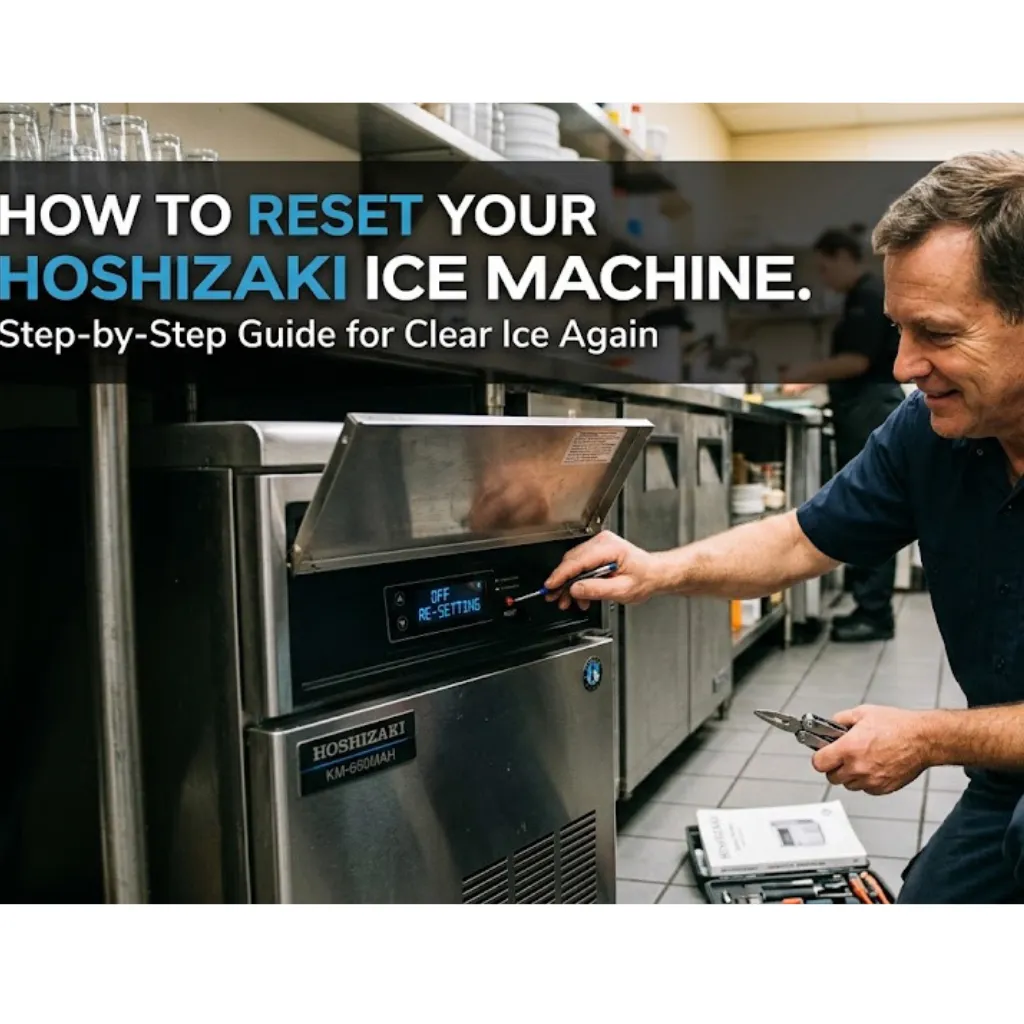
Learn How to Reset a Hoshizaki Ice Machine
Your Hoshizaki ice machine stops producing ice, and you're not sure what to do next. Before you call for service, it helps to understand what's happening inside the unit and whether a reset will get it running again.
At Pacific Ice Services, we're Oahu's certified factory authorized service provider for Hoshizaki commercial ice equipment. We answer these questions every day. Here's what you need to know about how to reset a Hoshizaki ice machine and when to call in a pro.
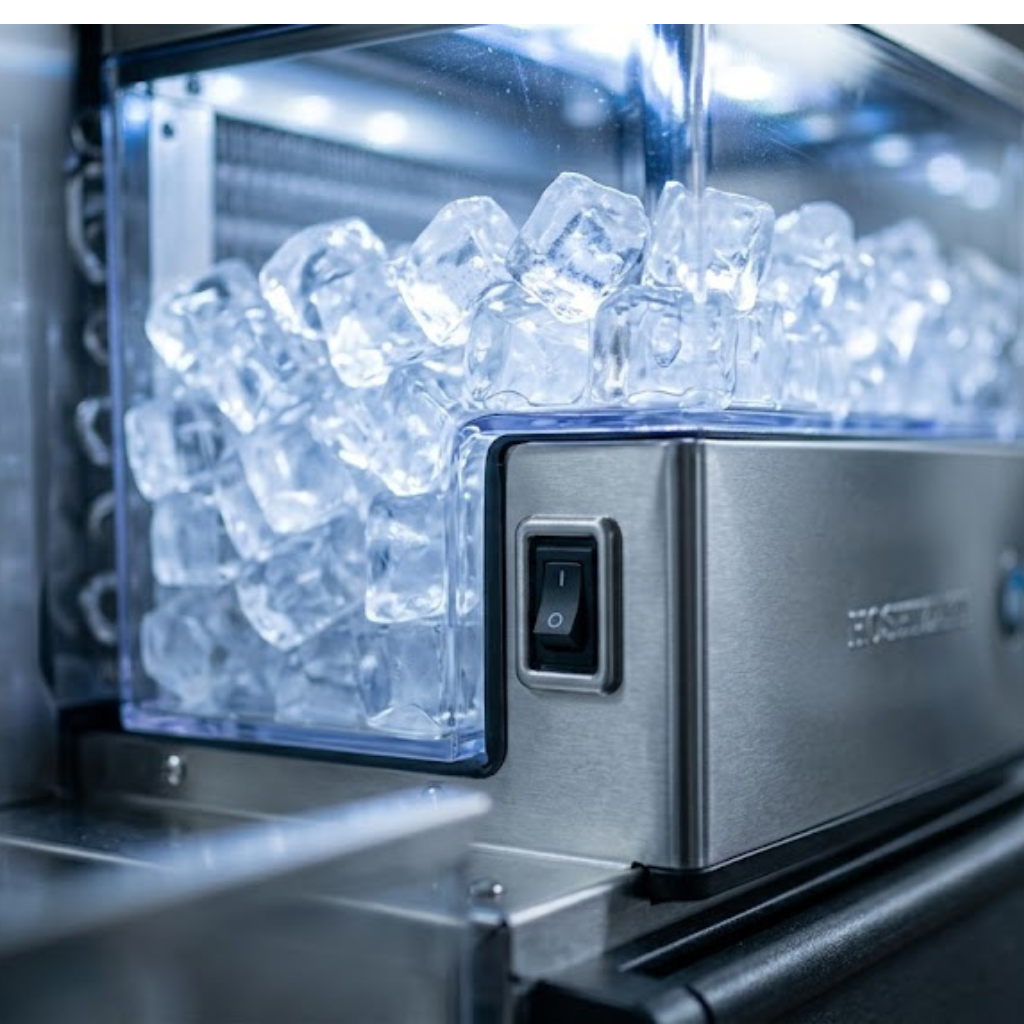
Why Your Hoshizaki Ice Machine May Need a Reset
Hoshizaki commercial ice machines don't shut down randomly. The control board monitors the machine at all times, and when it detects a problem, it triggers a safety shutdown to prevent further damage.
The most common reasons a unit shuts down include a long freeze cycle, a long harvest cycle, a high-temperature condition at the evaporator, or a voltage irregularity. In each case, the machine stops and sounds a beep alarm to tell you something's wrong.
A reset clears the alarm and restarts the ice-making process. But it only works if the underlying condition has been resolved. If the root cause is still there, the machine will shut down again after the reset.
That's the key question to ask before you reset: did the problem fix itself, or is something still wrong?
What Happens When a Hoshizaki Ice Maker Shuts Down
When the control board detects a fault, it runs a beep sequence every three seconds. The number of beeps tells you exactly which alarm code is active. After the alarm sounds, the board shuts the compressor and gear motor down to protect the unit.
The machine won't restart on its own until you clear the alarm. That's where the reset procedure comes in.
How to Reset a Hoshizaki Ice Machine: Step-by-Step
There are two ways to reset a Hoshizaki commercial ice maker: a full power cycle or a direct control board reset using the reset button. For most alarm codes, the control board reset is the correct method.
Here's the standard procedure for how to reset a Hoshizaki ice machine:
Turn the machine off using the on/off switch. Let it sit for five to ten minutes so the internal components can stabilize. If there's ice on the evaporator, wait for it to melt before you power the unit back on. Turn the machine back on, and check whether the alarm code clears.
If that doesn't work, or if the machine is beeping and you need to reset the alarm with the power
on, use the reset button on the control board directly.
Where to Find the Hoshizaki Reset Button
The reset button sits on the Hoshizaki control board, which is located behind the electrical panel inside the unit. On newer models, the button is white. On older Hoshizaki models, it may be black.
You'll find it next to the orange and yellow LED indicator lights on the board.
The board must have power when you press the reset button. Use a non-conductive tool, like the back of a pen or a silicone spatula, to press and hold the button for one second. The machine should begin its startup sequence. If a blue LED light appears, the unit has reset successfully.
Do not use a metal tool to press the button. The board carries live voltage.
Hoshizaki Beep Codes: What Each Alarm Means Before You Reset
Before you reset your Hoshizaki ice machine, count the beeps. Each pattern corresponds to a specific fault. Knowing the code tells you whether a reset is likely to help, or whether you need a technician.
1 beep: High temperature at the evaporator outlet. The thermistor has detected a temperature above 127 degrees Fahrenheit. Common causes include hot water entering the unit, a shorted thermistor, or a hot gas valve issue.
2 beeps: Long harvest cycle. The machine ran two consecutive 20-minute harvest cycles without completing them. Possible causes include a thermostatic expansion valve leak, low refrigerant, or a defective compressor.
3 beeps: Long freeze cycle. The freeze cycle exceeded 60 minutes two times in a row. This is one of the harder codes to diagnose. Causes range from a sticking float switch to refrigerant problems to a clogged check valve.
4 or 5 beeps: Circuit issues with the mechanical bin sensor. This applies to older Hoshizaki models like the KM-280, KM-500, KM-630, and KM-900. Four beeps signal a short circuit; five beeps signal an open circuit on the K-4 connector.
6 beeps: Low voltage. The unit received less than 92 volts and shut down automatically. This alarm resets on its own once the correct voltage is restored.
7 beeps: High voltage. The unit received more than 147 volts. Same automatic reset behavior as the 6-beep alarm.
8 beeps: The gear motor relay is de-energized. The compressor shuts down along with the gear motor. Try a power cycle first.
9 beeps: The ice bin is full. Empty the bin and the machine will resume production.
For beep codes 1, 2, 3, 4, and 5, you'll need to press the reset button on the control board with the power on after addressing the cause.
Hoshizaki Ice Machine Troubleshooting: When a Reset Does Not Fix the Problem
A reset gets the machine running again, but it doesn't repair anything. If the fault condition is still present, the alarm will come back. At that point, you're looking at a repair, not a reset.
Some of the most common issues that a reset won't solve include a defective float switch, a refrigerant leak, a failing compressor, a clogged condenser, or a malfunctioning water inlet valve.
A stuck float switch causes the machine to read a false "water full" condition, which prevents the freeze cycle from completing normally. This leads to repeated 3-beep alarms even after multiple resets.
Refrigerant issues and compressor problems require a certified EPA technician to diagnose and repair. You can't resolve these yourself, and continuing to reset the machine without fixing the cause will eventually cause more damage.
If your Hoshizaki keeps shutting down after you reset it, stop resetting and call a technician. Repeated resets on a machine with an active fault can lead to larger and more costly repairs.
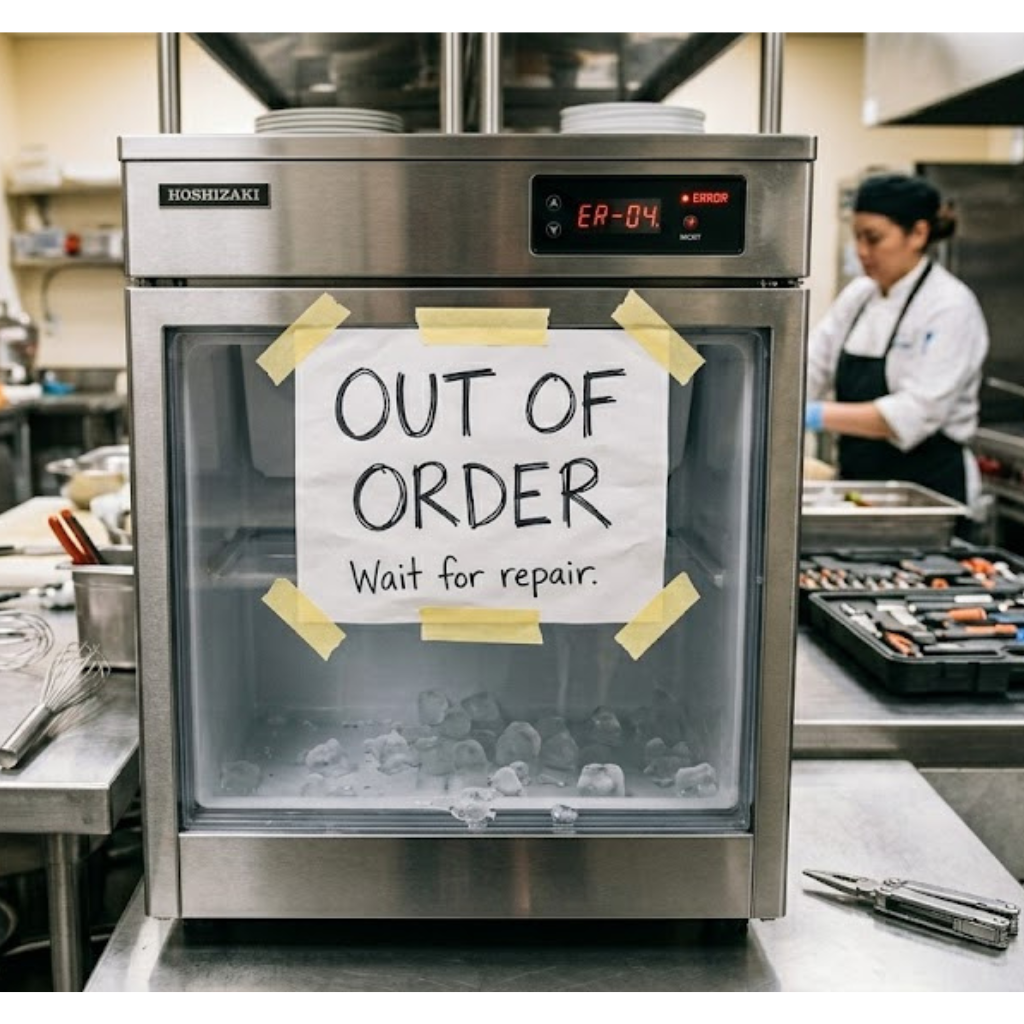
How to Prevent Hoshizaki Ice Machine Errors in the First Place
Most beep code alarms are preventable. Routine maintenance reduces the frequency of shutdowns significantly.
Clean the condenser coils regularly. A dirty condenser causes the unit to run hot, which triggers the 1-beep high temperature alarm. In Hawaii's humid environment, condenser buildup happens faster than on the mainland.
Check and replace your water filter on schedule. Scale buildup from Hawaii's water supply is a major cause of float switch problems, which lead to 3-beep freeze cycle alarms.
Monitor the float switch for scale deposits. If you see buildup, clean it with an approved ice machine cleaner.
Schedule preventive maintenance with a qualified technician at least once a year. A trained technician can catch early signs of refrigerant loss, valve wear, and electrical issues before they cause a shutdown.
Preventive maintenance isn't optional for commercial equipment. It protects your ice supply and extends the life of the machine.
When to Call Pacific Ice Services for Hoshizaki Ice Machine Repair on Oahu
You now know how to reset a Hoshizaki ice machine and what each beep code means. But if your machine keeps shutting down, beeps after every reset, or shows alarm codes 1 through 5, it's time to bring in a professional.
Pacific Ice Services is Oahu's certified factory authorized service provider for Hoshizaki commercial ice equipment. Our EPA-certified technicians diagnose and repair all Hoshizaki models, from KM series cube machines to flakers and specialty units. We carry a wide range of parts in stock, so we can often complete repairs the same day.
We also offer preventive maintenance plans to help your business avoid emergency shutdowns and keep ice production consistent year-round.
If your Hoshizaki ice machine is beeping, not making ice, or stuck in a fault cycle, call us..
Visit our ice machine repair page to learn more about what we fix, or head to our maintenance and installation page if you want to set up a preventive care schedule. You can also reach us directly through our contact page.
A reset is a starting point. Pacific Ice Services is the solution.
