
How Much Is an Ice Machine in Hawaii?
If you run a restaurant, hotel, bar, or any food service business on Oahu, you've probably asked this question. How much is an ice machine in Hawaii, and what actually determines the cost.
The short answer is that there isn't one number. Commercial ice machine pricing depends on a range of variables, and on an island like Oahu, some of those variables work against you in ways that mainland buyers don't face. Understanding what drives the cost puts you in a better position before you buy, rent, or lease.
At Pacific Ice Services, we've worked with businesses across Oahu since 1973. We hear this question constantly. Here's what we tell every business owner who asks.
How Much Is a Commercial Ice Machine? It Depends on These Factors
The machine itself is only part of what you'll pay. Installation, water filtration, maintenance, and the ongoing cost of running the unit all add to the total investment over time.
What you spend up front varies significantly based on the type of unit, its daily production capacity, the condenser configuration, and the brand. Businesses that focus only on the sticker price often end up paying more over time because they chose the wrong machine for their actual needs.
The right question isn't just what a commercial ice machine costs. It's what the right commercial ice machine for your operation costs, including everything beyond the purchase.
Machine Type and Configuration Drive the Starting Price
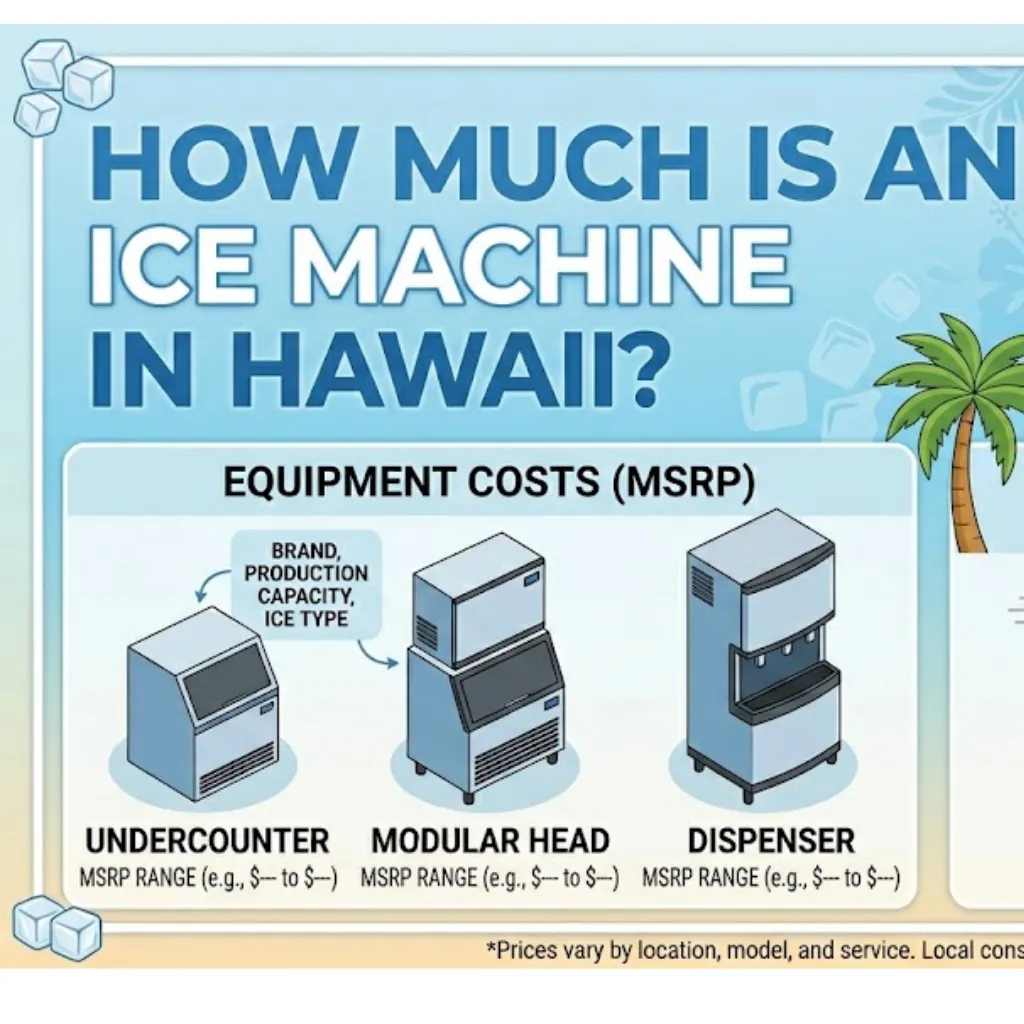
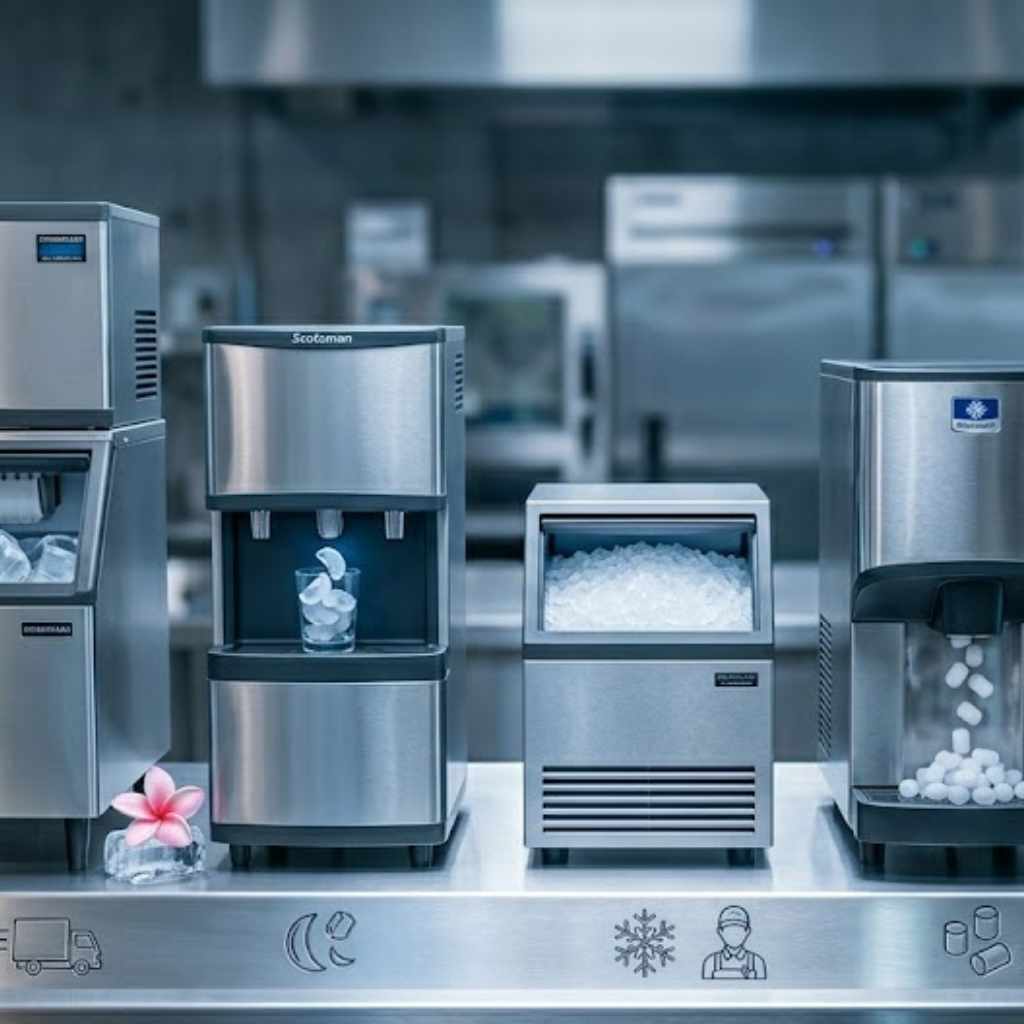
There are three main configurations to choose from: modular units, self-contained units, and undercounter machines. This contributes to the answer to: how much is an ice machine in Hawaii.
Modular systems separate the ice-making head from the storage bin. They produce the largest volumes of ice and suit high-demand operations like hotel kitchens and busy restaurant bars. They sit at the higher end of the price range.
Self-contained units combine the ice maker and bin in one unit. They're a practical choice for mid-volume operations and take up less space than a modular setup.
Undercounter machines are compact, lower-capacity units that fit beneath a counter. They work well for smaller cafes, offices, or spaces where ice demand is moderate and floor space is limited. These carry a lower purchase cost but also a lower output ceiling.
Your configuration choice should match your actual daily ice demand, not just your available space or budget. An undercounter machine that can't keep up with your lunch rush costs you more in the long run than the money you saved up front.
Production Capacity Determines How Much You Spend
Daily output, measured in pounds of ice per day, is one of the biggest drivers of commercial ice machine cost. The more ice a machine produces, the more you pay.
A small unit producing under 300 pounds per day suits a compact operation. A mid-range machine in the 300 to 1,000 pound range covers most full-service restaurant and bar operations. High-capacity modular systems producing well above 1,000 pounds daily serve large hotels, catering operations, and high-volume food service businesses.
The trap most buyers fall into is undersizing. On Oahu, heat and humidity reduce ice machine output relative to what the manufacturer rates the machine at under ideal conditions. Industry guidance for Hawaii businesses is to add 10 to 15 percent to your estimated daily ice need to account for this output reduction.
If your machine runs at capacity constantly, it wears out faster and breaks down more often. Size up appropriately from the start.
Air-Cooled vs. Water-Cooled vs. Remote Condenser: What Hawaii Businesses Need to Know
Condenser type is one of the most important decisions you'll make, and it has a direct impact on both the purchase price and your monthly utility costs.
Air-cooled machines use a fan to move ambient air over the condenser coils. They're the most common type and carry the lowest purchase price. The trade-off is that they require adequate clearance around the unit for airflow, and in Hawaii's year-round heat, they work harder than they would in a cooler climate.
Water-cooled machines use a continuous flow of water to cool the condenser. They perform more consistently in hot kitchen environments, but they consume significantly more water, which raises your utility costs and can create complications in certain Oahu commercial spaces.
Remote condenser systems locate the condenser unit separately, typically on a rooftop. They keep heat and noise out of the kitchen and perform well in Hawaii's warm conditions. They carry a higher purchase and installation cost, but many Oahu businesses find the operational benefits justify the investment.
Hawaii's climate puts more strain on ice machines than most operators plan for. Salt air, high humidity, and sustained heat accelerate wear on condenser coils and internal components. Condenser type selection isn't just a cost decision. It's a longevity decision.
Buy, Rent, or Lease: Which Option Makes Sense for Your Budget
How you acquire your commercial ice machine affects your upfront outlay and your long-term financial exposure.
Buying outright gives you full ownership and eliminates monthly payments after the purchase. It makes sense for established businesses with stable ice demand and the capital to invest. You're responsible for all maintenance and repairs, which means unexpected costs are possible.
Renting keeps your upfront cost low. It works well for seasonal operations, businesses in a growth phase, or operators who want to avoid the risk of ownership. Rental agreements vary in length and terms, and some include service provisions.
Leasing sits between the two. It typically involves a fixed monthly payment over a set term, and at the end of the agreement you may have options to purchase, upgrade, or return the equipment.
Pacific Ice Services offers commercial ice machine sales and rental on Oahu. We can walk you through which acquisition model fits your operation based on your ice volume, budget, and business stage.
Don't Forget Installation, Maintenance, and Hawaii-Specific Costs
The machine price is only the starting point. Installation adds cost, and Oahu's commercial environment creates requirements that some buyers don't anticipate.
Most commercial ice machines require a dedicated electrical circuit, a cold water supply line, and access to a floor drain. If those aren't already in place at your location, installation costs increase.
Water filtration is not optional in Hawaii. Honolulu's municipal water supply contains minerals that scale the internal components of ice machines, reduce output, and shorten equipment life. A commercial-grade water filtration system is a necessary addition to any ice machine install on Oahu.
Preventive maintenance is also a cost to plan for. Hawaii's salt air and humidity accelerate wear on ice machines at a faster rate than most mainland environments. Regular cleaning, filter replacement, and professional service extend the life of your machine and reduce repair frequency.
Businesses that skip preventive maintenance on Oahu consistently face more frequent breakdowns and shorter equipment lifespan.
Why Working with a Local Oahu Ice Machine Provider Matters
An ice machine is a long-term investment. Who sells it to you, installs it, and services it over its life matters as much as the unit itself.
If you're trying to figure out how much is an ice machine in Hawaii for your business, the best place to start is a direct conversation with someone who installs and services them here every day.
Contact Pacific Ice Services for a quote. You can also visit our sales and rental page to see what we carry, or our maintenance and installation page to learn more about what goes into a proper Oahu ice machine setup. Ready to get started? Reach out through our contact page.
